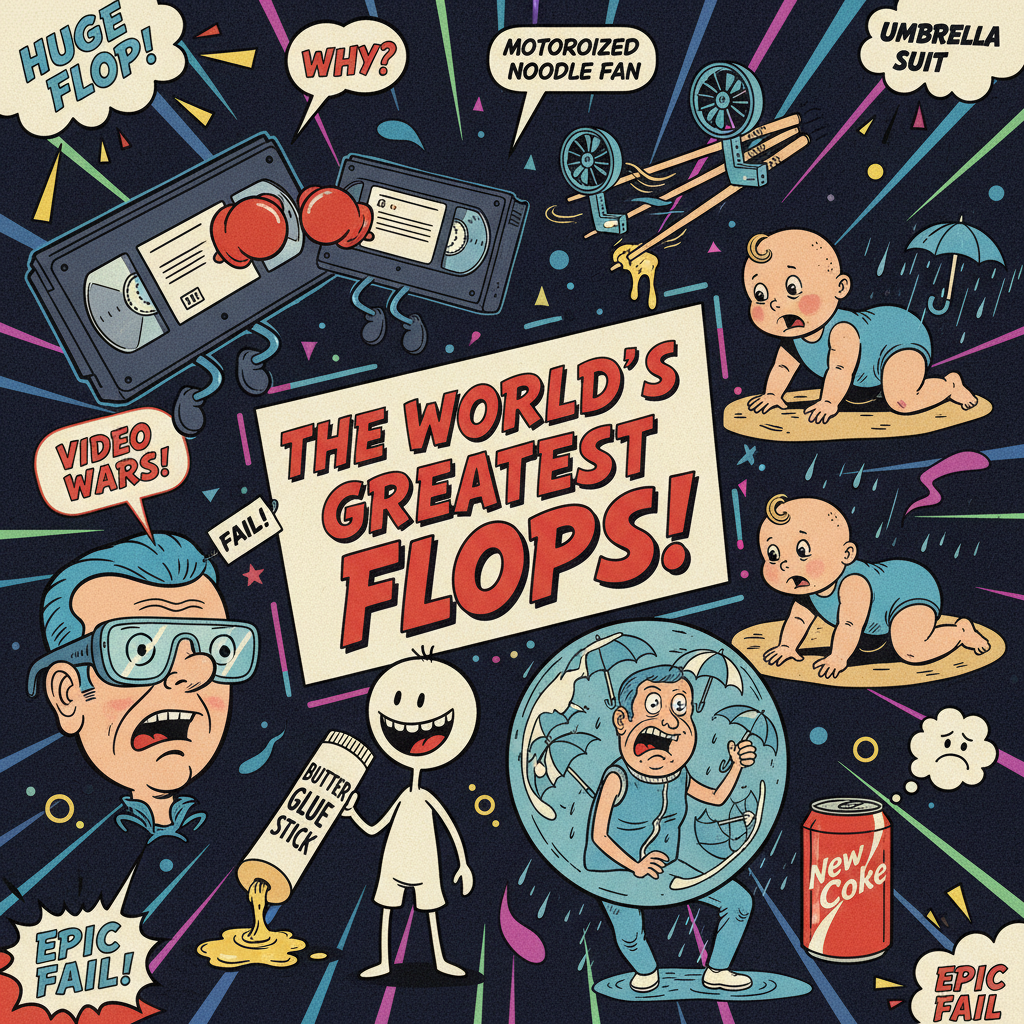

'New' Coke In 1985, The Coca-Cola Company decided to “improve” Coca-Cola. They launched New Coke and people lost their minds. There were protests, people started hoarding old Coke, there was emotional outrage (seriously). It didn't go down well and must have cost a fortune to put to market. They had to bring back the original formula… fast. Quick Take: Never underestimate how attached people are to what they already love.

Betamax Back in the 1970s, Sony launched Betamax, a home video system that let you record TV and watch films whenever you wanted you didn't have to goto the cinema. At the time, this felt like pure magic. Not like todays Netflix and streaming. There was however a rival: VHS (Video Home System) and this is where things got interesting. Here’s the Twist: Betamax was technically BETTER. Betamax had sharper picture quality, better sound and smaller tapes.
So why didn’t it win? The recording time was too short. Early Betamax tapes only recorded for 1 hour, but VHS tapes could go up to 4 hours. People wanted to record entire movies or sports games. Movie Studios Backed VHS so more films where released on VHS and rental stores (yes before Netflix) stocked VHS first. By the mid-1980s VHS dominated globally and Betamax faded out and Sony eventually started making VHS players themselves. The best technology doesn’t win… the best-adopted one does. Final Thought, Betamax didn’t fail because it was bad. It failed because it misunderstood people.

Google Glass — glasses with a built-in camera and display.
In 2013, Google launched Google Glass — smart glasses that could put the internet right in front of your eyes. No phone. No hands. Just… look and see. They Sounded cool until people thought you were secretly recording them, bars banned them, you got a nickname: “Glasshole”
Think of it as a tiny computer on your face. You could take photos & videos hands-free, get directions in real time, read messages floating in your vision, use voice commands (“OK Glass…”), access the internet instantly. It was early Augmented Reality (AR) before AR was mainstream. It projected a small screen into your vision that looked like a floating notification, Basically what GoPros and TikTok POV trends later exploded into. At the time, this felt like living in the future, having Iron Man-style HUD vision.
So Why Did It Flop? There was a huge privacy Panic, people saw the camera and thought “Am I being recorded right now?”. Bars banned it as people confronted users causing social awkwardness. The tech failed the social acceptance test and the price tag was around $1,500 at launch. Today, versions of it are used in factories (hands-free instructions) and healthcare (surgeons viewing data mid-operation).
More amusing inventions that were not entirely useless

The Motorised Noodle Cooler
Ever burned your mouth on noodles? Problem solved. This gadget attaches a tiny fan to your chopsticks that cools your noodles as you eat. Yes… really. Slurp → instant breeze. Looks completely ridiculous and makes dining feel like a wind tunnel

The Full-Body Umbrella Suit
Why carry an umbrella… when you can become one? This invention is basically a giant wearable bubble umbrella that covers your entire body and keeps you dry head to toe. It also guarantees nobody stands near you. It has maximum dryness with minimum dignity.

The Butter Stick (Like a Glue Stick)
Butter your toast… like you’re using a glue stick. Just twist and butter comes out for perfect spreading. Confuse everyone watching. It seems efficient… but deeply unsettling.

The Baby Mop Suit
Why clean your floor… when your baby can do it for you? This outfit turns your crawling child into a living mop as the baby crawls the floor gets cleaned. Cute AND productive but with a questionable parenting strategy